
Cairns & FNQ Property Buying Guide
Cairns Property, FNQ Real Estate, Buying Guide
Buying Property in Cairns & FNQ: What to Know Before You Start
Thinking about buying in Cairns or the wider Far North Queensland (FNQ) region? From strong price growth to unique climate and lifestyle factors, this corner of Australia plays by its own rules. This buying guide walks you through the key Cairns market trends, what makes FNQ real estate different, and the practical steps to take before you sign a contract.
Why Cairns & FNQ Are on So Many Buyers’ Shortlists
Cairns property has long appealed to lifestyle buyers, sea-changers and investors chasing sunshine and solid returns. The region offers a rare mix: access to the Great Barrier Reef and World Heritage rainforest, a growing population, and prices that still look affordable compared with the southern capitals. According to multiple 2026 market reports, Cairns has largely bucked the national downturn, with median dwelling values around $673,000–$679,000 and annual growth of roughly 10–13% (realestate.com.au).
For buyers considering FNQ real estate more broadly, the story is similar: lifestyle is a major driver, but so is the perception of value. Over the decade to 2025, Cairns houses rose about 86% and units nearly 88%, while land values increased around 65% (PRD Regional Edition 2026). Those who bought early have been well rewarded; those entering now need to be informed and strategic.
Snapshot of 2026 Cairns Market Trends
Before you start shortlisting properties, it pays to understand where the Cairns market sits in the cycle. Recent data paints a picture of strong but gradually cooling growth, with important differences between houses, units and land.
All dwellings: Median prices sit around $673,000, up just over 10% year-on-year, after an earlier surge to about $679,000 with 16% annual growth (realestate.com.au).
Houses: Citywide medians are in the mid-$700,000s, with the broader Cairns LGA recording a mid‑2026 median of roughly $810,000, up 8.7% on 2025 (Opteon).
Units: Median prices hover in the mid‑$400,000s, with annual gains between about 7% and 19% depending on the period measured (Opteon, realestate.com.au).
Land: Residential land has been one of the standout performers, with a Q1 2026 median around $363,750, up roughly 41% in a single year (HIA).
Importantly, July 2026 recorded the first small monthly price fall since 2020 (around –0.16%), suggesting the market may be shifting from rapid growth to a more balanced phase. For buyers, that can mean slightly more negotiating power, but it does not erase the underlying shortage of homes and land coming through the pipeline.
📌 Key Takeaway: Cairns market trends show strong long‑term growth with signs of cooling, but structural land shortages are likely to keep prices under upward pressure.
Houses, Units or Land? Choosing the Right Cairns Property
One of the most important decisions when buying property in Cairns & FNQ is which segment suits your goals. Each has its own price point, risk profile and lifestyle or investment appeal.
Detached Houses: Lifestyle Appeal at a Premium
Houses are the traditional favourite in FNQ real estate, especially for families, upgraders and retirees wanting space, a yard and the classic Queenslander feel. With median prices around $753,000 for houses and even higher across the broader LGA, this is now a relatively premium option compared with units. Over the past year, many suburbs have seen house values jump by $78,000 or more, reflecting intense demand and limited new supply.
Units: Affordability and Yield in Focus
Units have been one of the strongest-performing segments, with annual gains of up to 19.6% in some periods and medians around $456,000–$465,000. They remain comparatively affordable, especially for interstate investors and first‑home buyers. Lower‑priced units, particularly under $700,000, can still offer gross yields up to about 7.7%, making them attractive in a market where yields on higher‑value homes are being squeezed (HTW Month in Review 2026).
Vacant Land: Limited but Powerful Upside
If you are dreaming of building, be aware that land is both scarce and expensive. HIA data shows the median residential lot price jumping more than 40% year‑on‑year to around $363,750 in early 2026, with the broader LGA median closer to $418,500. At the same time, the Cairns Regional Council has been approving fewer than 700 homes per year, while national targets suggest the region needs about 1,550 new homes annually to keep up with demand. That mismatch is a key reason land values have surged and could continue to do so.
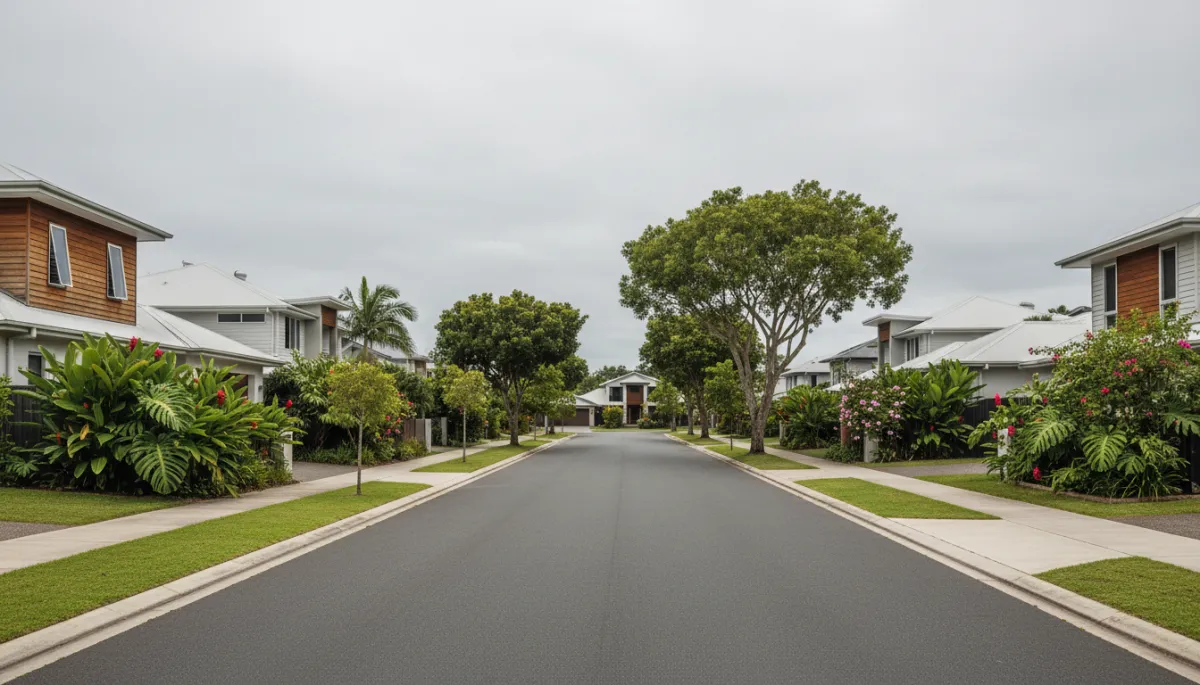
Tight land supply and strong demand have reshaped prices across many Cairns suburbs.
Unique Local Factors When Buying Property in Cairns & FNQ
Buying in Far North Queensland is not the same as buying in Brisbane, Sydney or Melbourne. The tropical climate, environmental overlays and tourism‑driven economy all affect how you should assess a property. Any buying guide for Cairns property needs to address these local realities head‑on.
Climate, Cyclones and Building Standards
Cairns has a tropical climate with a distinct wet season, high humidity and the occasional cyclone. That means you should pay close attention to:
Construction quality: Look for properties built or upgraded to current cyclone ratings, with solid roofing, secure tie‑downs and storm‑ready windows or shutters.
Ventilation and design: High ceilings, wide eaves, louvers and shaded outdoor spaces are more than aesthetic—they help keep homes cool and reduce reliance on air‑conditioning.
Maintenance: The climate can be tough on paint, roofing and timber. Factor in higher ongoing maintenance compared with cooler southern regions.
Flooding, Drainage and Insurance
Parts of Cairns and FNQ are low‑lying or close to creeks and rivers. While many suburbs are well‑planned and protected, flood mapping and insurance costs should be non‑negotiable checks in your buying process. Ask your solicitor to review flood overlays, and obtain insurance quotes early so you are not surprised by premiums that may be higher than you are used to elsewhere in Queensland.
Tourism, Population and Employment Base
Cairns’ economy has a strong tourism component, but it is also supported by health, education, construction and public services. From 2020 to 2025, the Cairns LGA population grew by around 5.1%, while unemployment sat at a relatively low 4.4% in late 2025 (PRD). For buyers, this means a reasonably diversified demand base—but also exposure to global travel trends, particularly if you are targeting short‑stay or holiday rentals.
💡 Pro Tip: If you are considering a holiday‑let or short‑stay property, check local council regulations and body corporate by‑laws carefully—some complexes limit or prohibit certain rental models.
Step‑by‑Step Buying Guide for Cairns & FNQ Real Estate
1. Clarify Your Strategy and Budget
Start by deciding whether you are buying a home, a lifestyle retreat or an investment. Your goals will shape where and what you buy. For instance, a retiree may favour a low‑maintenance unit near the Esplanade, while an investor might prioritise a high‑yield unit in a well‑located suburb, or a house with strong family rental demand near schools.
Next, determine your full budget, including stamp duty, legal fees, building and pest inspections, loan costs, potential strata levies and ongoing rates and insurance. With Cairns property prices having risen sharply over recent years, it is wise to obtain loan pre‑approval so you can move quickly on the right opportunity.
2. Research Suburbs and Micro‑Markets
Not all parts of FNQ real estate move in lockstep. Some family suburbs have added more than $60,000 in just one quarter, while other pockets may be stabilising or lagging. Look at:
Recent sales data and days‑on‑market for your target suburbs.
Proximity to employment hubs, schools, hospitals and transport.
Planned infrastructure or development—new roads, shopping centres or health facilities can support long‑term growth.
Talking to multiple local agents, reading market reports, and even spending time in the neighbourhood at different times of day will give you a more grounded feel than online data alone.
3. Understand the Legal Landscape in Queensland
Buying property in Queensland has its own legal nuances, from contract conditions to cooling‑off periods and body corporate rules. Engage a local solicitor or conveyancer early to:
Review the contract of sale, title search and any easements or encumbrances.
Check zoning, flood overlays, environmental or heritage restrictions and building approvals.
Understand your rights around finance and building and pest clauses, and how to structure conditions to protect yourself.
4. Arrange Thorough Inspections
In a tropical environment, building and pest inspections are non‑negotiable parts of any buying guide. Timber pests, moisture, drainage issues and previous cyclone damage can all be costly if missed. For units, add a strata records inspection to check the building’s financial health, sinking fund, outstanding maintenance and any history of water ingress or structural problems.
5. Assess Rental Potential and Yields (If Investing)
For investors, FNQ real estate offers a mix of long‑term tenants, tourism workers, students and short‑stay guests. As prices have risen, yields on higher‑value houses have compressed, while more modestly priced units continue to offer stronger gross returns. Ask local property managers for realistic rental appraisals, vacancy rates and tenant profiles in your target suburb, and stress‑test your numbers against potential interest rate rises or periods of vacancy.
6. Negotiate Smartly and Stay Objective
With Cairns market trends showing signs of moderating after several years of strong gains, buyers may have a little more room to negotiate than in the peak frenzy. Use recent comparable sales, days‑on‑market and any property defects uncovered in inspections to support your offer. Be ready to walk away if the numbers do not stack up—there will always be another opportunity, especially in a market that is moving from rapid growth to a more balanced phase.
📌 Key Takeaway: Treat your purchase like a business decision, even if you plan to live in the property. Emotion can cloud your judgment in a competitive Cairns property market.
Who Is Buying in Cairns Right Now?
Understanding who you are competing with can help you tailor your strategy. Current reports highlight three especially active buyer groups in the Cairns property market:
Lifestyle migrants and retirees drawn by the climate, natural beauty and comparatively relaxed pace of life. They are often less sensitive to short‑term market movements and more focused on finding the “right” home or apartment.
Interstate investors from southern capitals, attracted by lower entry prices and stronger yields than they can achieve at home, particularly in the unit market under $700,000.
Local first‑home buyers and upgraders, who are increasingly competing with investors for well‑located houses and units.
Market sentiment indicators suggest that houses are at or near a “peak” growth phase, while units are in a “slowing” but still positive stage (Buyers First Momentum Dial). That does not mean prices will fall sharply, but it does underline the importance of buying quality assets, rather than chasing short‑term gains.
Practical Tips for a Smooth Purchase in Cairns & FNQ
Visit in both wet and dry seasons: Streets and properties can feel very different in heavy rain and humidity compared with the dry, sunny months.
Talk to neighbours: Locals can provide insight on noise, flooding, traffic and community feel that you will not find in a brochure.
Check council records: Confirm that extensions, decks, pools and sheds all have the necessary approvals and final inspections.
Factor in travel costs: If you live interstate, budget for multiple trips to inspect properties, attend pre‑settlement inspections and meet with professionals.
Final Thoughts: Entering the Cairns Market with Confidence
Buying property in Cairns & FNQ in 2026 means stepping into a market that has already delivered exceptional growth, but still offers compelling lifestyle and investment appeal. Cairns market trends point to a region where demand from lifestyle buyers and investors continues to meet limited new supply, especially for well‑located houses and residential land. At the same time, early signs of cooling growth give patient, well‑prepared buyers a chance to negotiate and avoid over‑stretching.
Whether you are targeting a waterfront unit, a family home close to schools, or a block of land to build your dream tropical retreat, the fundamentals of a smart purchase remain the same: know your numbers, do your homework, lean on local expertise and never skip due diligence. Approached this way, FNQ real estate can offer not just a slice of paradise, but a resilient long‑term asset in your property portfolio.
As always, use this buying guide as a starting point, then layer in tailored advice from local agents, finance professionals and legal experts. With the right preparation, your next step into the Cairns property market can be both exciting and financially rewarding.

Terms & Conditions | Privacy Policy
Copyright 2025 - Mayfair Buyers Agent, All Rights Reserved